Serves 6 to 8 | Prep: 1 hour 30 minutes, including chilling | Cook: 25 minutes
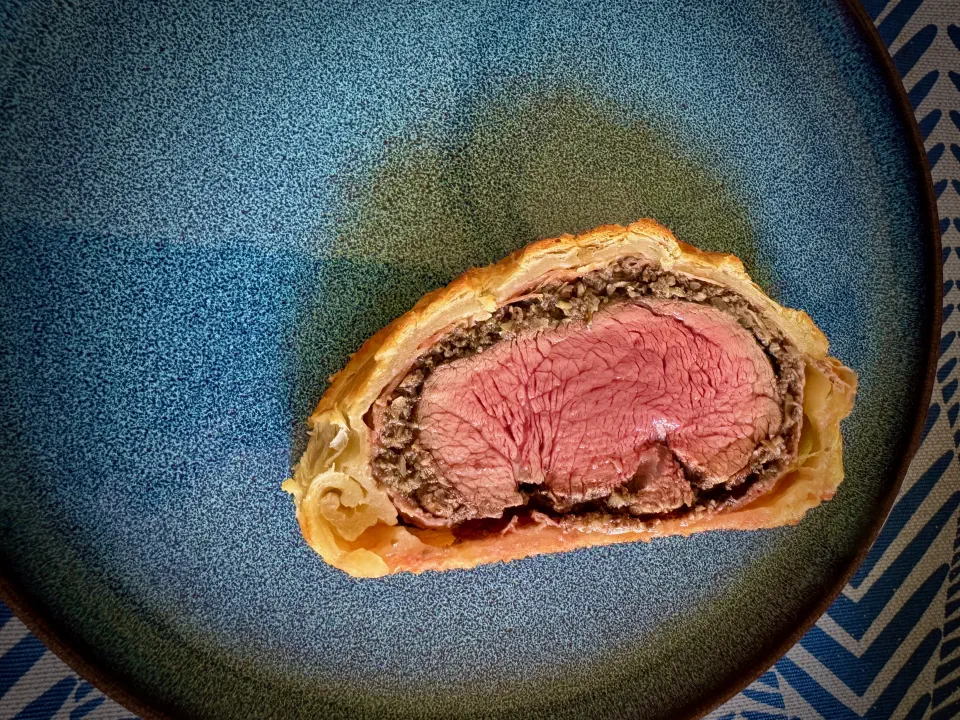
The dish’s provenance is murky and contested; some credit the Duke of Wellington, some credit a Victorian obsession with wrapping things in pastry, some claim it’s really just French filet de bœuf en croûte with a patriotic haircut. Frankly, nobody cares. What matters is that when you slice into one, and the pastry shatters prettily against the knife, and the fillet reveals itself as a deep, glistening ruby ringed by a dark band of mushrooms and ham, well, any quibbles about historical accuracy tend to evaporate.
Ingredients
- 2kg beef fillet (ask your butcher to trim and tie it, they will; they like being asked)
- 500g mushrooms (chestnut, button, or a mix; nothing too precious)
- 10 slices pancetta or thinly sliced jamón serrano
- 2 sheets good-quality all-butter puff pastry (store-bought is entirely fine and I will not be shamed for saying so)
- A few sprigs of fresh thyme
- Extra virgin olive oil
- Flaky sea salt
- Freshly ground black pepper
- 50g unsalted butter
- 1 egg, beaten (for the glaze)
- Optional: a splash of dry white wine
Method
1. Sear the fillet
Take the beef out of the fridge a good hour before you plan to cook it; cold meat straight from the fridge sears unevenly and sulks in the pan. Trim off any silverskin and excess fat, rub the fillet generously with olive oil and crack over an indecent amount of black pepper. Get a heavy pan screaming hot (smoke-alarm hot) and sear the fillet on every side until the exterior is a deep, mahogany crust. The inside should still be properly rare; this is only about building flavour on the outside, not cooking the thing.
Lift it out, set it on a plate, and transfer it to the fridge to cool completely. This part is non-negotiable.
Tip: The darker the sear the better. You’re after a genuine crust, not a timid tan. If the pan isn’t smoking, it isn’t ready. And don’t salt the meat until after it’s seared; salt draws out moisture, moisture kills the crust, and a Wellington without a good crust is a very sad thing.
2. Make the duxelles
Roughly blitz the mushrooms in a food processor; aim for the texture of coarse breadcrumbs, not a beige paste. If you’re doing it by hand, channel your frustrations productively.
Warm a large pan over medium heat with a generous glug of olive oil and the butter. Once it’s foaming, tip in the mushrooms, a few thyme leaves and a pinch of salt. They’ll release a shocking amount of water; just keep cooking and stirring patiently until the pan dries out completely and the mixture turns dark, glossy and almost paste-like. Optional but lovely: a splash of white wine once the water has gone, cooked off until the pan is dry again.
Spread the duxelles out on a plate and leave it to cool to room temperature. A warm duxelles will sog the pastry, and a soggy Wellington is a crime against dinner.
Tip: Taste the mushrooms before you take them off the heat. They should be deeply savoury, almost meaty in their own right. If they taste underwhelming at this stage, no amount of pastry will fix it. Add another pinch of salt and another sprig of thyme if needed.
3. Wrap the fillet
Lay a large sheet of clingfilm across your worktop; be generous, you’ll want overhang. Arrange the pancetta or jamón serrano across it in a slightly overlapping rectangle, large enough to wrap the fillet completely. Spread the cooled duxelles evenly over the ham in a thin, neat layer, then place the fillet in the middle.
Using the clingfilm, roll the ham and mushrooms tightly around the fillet (like you’re wrapping an extremely expensive swiss roll) and twist the ends of the clingfilm to compress everything into a neat, firm cylinder. Back in the fridge for at least 30 minutes to set. This resting is what gives you a clean, round cross-section when you slice into it later; skip it and the whole thing will slouch apologetically.
4. Pastry on
Preheat the oven to 200°C (fan) / 220°C conventional / 425°F. Line a large baking tray with parchment.
Roll out one sheet of puff pastry on a lightly floured surface, just enough to give yourself a bit of extra real estate. Unwrap the chilled fillet, discard the clingfilm, and place it at one edge of the pastry. Roll the pastry over the fillet, trimming the excess so the seam sits underneath. Tuck the ends in neatly and press them down with a fork; don’t fuss, just make sure they’re sealed.
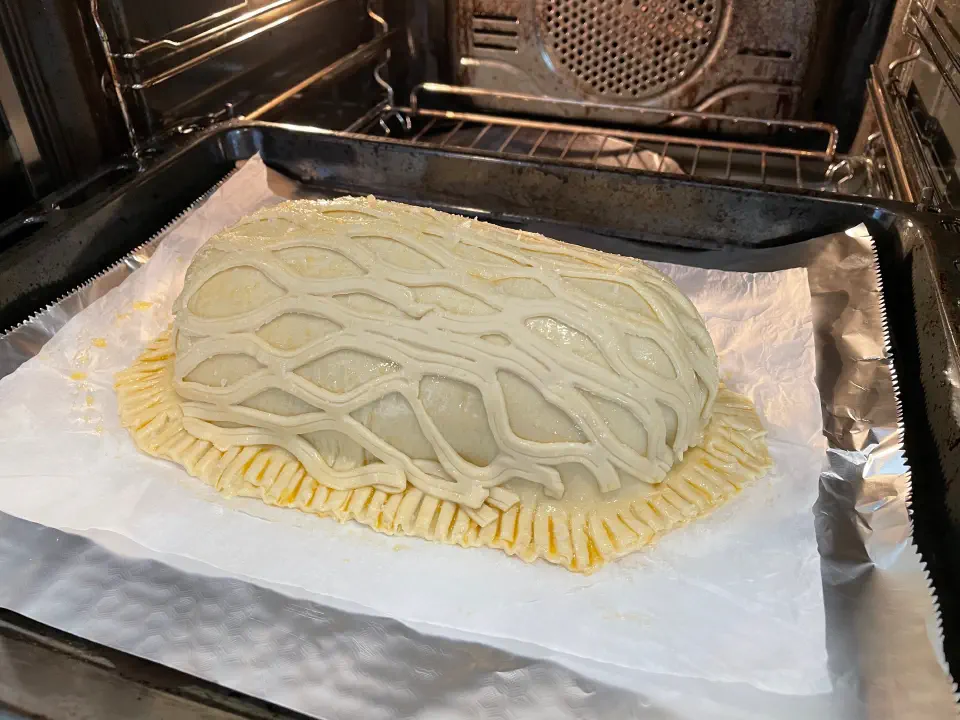
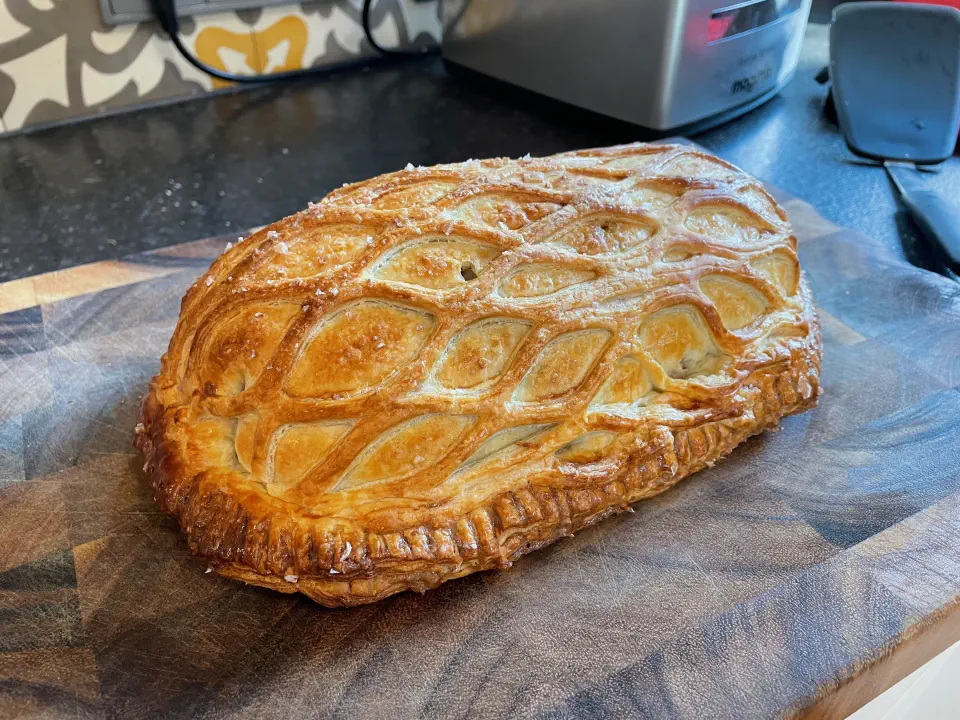
Tip: If you want the full dinner-party flourish, take the second sheet of pastry and run it through a lattice cutter (or slice your own strips and weave them, therapeutic, frankly). Drape the lattice over the top of the wrapped fillet and press the edges down gently. It looks ridiculous and magnificent and makes people audibly gasp. Worth it.
5. Glaze and bake
Brush the whole thing generously with beaten egg; get into every crevice. Sprinkle over flaky sea salt. This is what gives you that burnished, lacquered-antique finish that makes Wellingtons look so smug on Instagram.
Slide it into the oven and bake for 25 minutes for medium-rare on a 2kg fillet, and the pastry should be deep golden and the internal temperature around 52-54°C if you’re the sort of person with a meat thermometer (you should be). For medium, give it another 5 minutes. Any longer than that and you’re wasting a very good piece of beef, and I will be disappointed in you from a distance.
6. Rest, then slice
Lift the Wellington onto a board and let it rest for a full 8-10 minutes. This is the part where most people’s nerve fails them and they start slicing too early; resist. The fillet needs time for the juices to settle, and the pastry needs time to stop being molten lava. Use this window to open the wine and set out proper wine glasses; a dish this showy deserves the full table.
When you finally cut into it, use a properly sharp knife and commit to each slice in one confident motion. Thick cuts, roughly 2-3cm each. The first slice is always a bit of a gamble; the second will be perfect.
Tip: If you’ve gone for the lattice top, slice carefully to keep it intact, and serve with the lattice side up, always. This is not the moment for humility.
To Serve
Serve with whatever feels appropriately grand. Buttered greens, a pile of crisp roast potatoes, a proper red wine jus if you’re feeling industrious, horseradish cream if you’re feeling British. A bottle of something red, ideally with some age on it, a good Bordeaux, a Barolo if you’re showing off, or a decent Rioja if you’d like to keep the evening cheerful rather than reverent.
In Conclusion
Beef Wellington has spent decades being billed as the Everest of home cooking, and it simply isn’t. It’s a dish of small, unhurried tasks (sear, chop, wrap, roll, bake) each one entirely manageable, each one giving you a chance to stand back and feel quietly pleased with yourself. There are no soufflé-like tantrums, no tempered chocolate, no emulsions threatening to split. Just beef, mushrooms, ham and pastry, doing what they do.
Make it once and you’ll be astonished it was ever considered difficult. Make it twice and you’ll start developing opinions about pastry brands. Make it three times and you’ll find yourself, sometime around the second glass of wine, saying things like “well, the trick, of course, is the duxelles” to people who did not ask. This is the natural order of things. Welcome to the club.